 how-to
Is Safe Cat Grooming in Houston Worth It?
Last Updated: October 30, 2026
Quick Summary
Safe cat grooming in Houston is worth it when the groomer reads feline stress signals, keeps sessions short and gentle, and refers health concerns to a veterinarian. Heights Grooming offers salon-based cat grooming with individualized care, and we do not offer mobile grooming.
- Watch for flattened ears, dilated pupils, a thrashing tail, hissing, freezing, or fast breathing during handling.
- Let the cat sniff the brush and brush one body area per session, building gradually with treats or play.
- Help your cat become familiar with its carrier well before the appointment, and tell your groomer about any health or handling concerns.
- See a veterinarian for open sores, oozing skin, sudden patchy hair loss, ear discharge, or a cat that suddenly will not tolerate touch.
- Ask whether a groomer works with cats regularly and how they handle a stressed cat before you book.
Table of Contents
- What Cat Grooming Stress Signs Should You Watch For?
- How to Brush a Cat Without Overwhelming Them
- Cat Grooming Appointment Preparation: A Calm Start
- When Should a Cat See a Vet Instead of a Groomer?
- How Do You Choose a Cat-Experienced Groomer?
- What Matters Most for Safe Cat Grooming in Houston
- Frequently Asked Questions
What Cat Grooming Stress Signs Should You Watch For?
Safe cat grooming in Houston starts with reading the cat, not the clippers. According to the American Association of Feline Practitioners and International Society of Feline Medicine guidelines on feline handling, cats are sensitive to unfamiliar smells, sounds, and restraint, and low-stress handling makes a measurable difference.
At Heights Grooming, we watch for flattened ears, dilated pupils, a tucked or thrashing tail, hissing or growling, freezing, sweaty paw prints, and fast, shallow breathing. When several of these signals appear together, it is a good time to stop, reset, and give the cat space. If you are considering professional help, you can learn about cat grooming services in the Heights and what to expect.
How to Brush a Cat Without Overwhelming Them
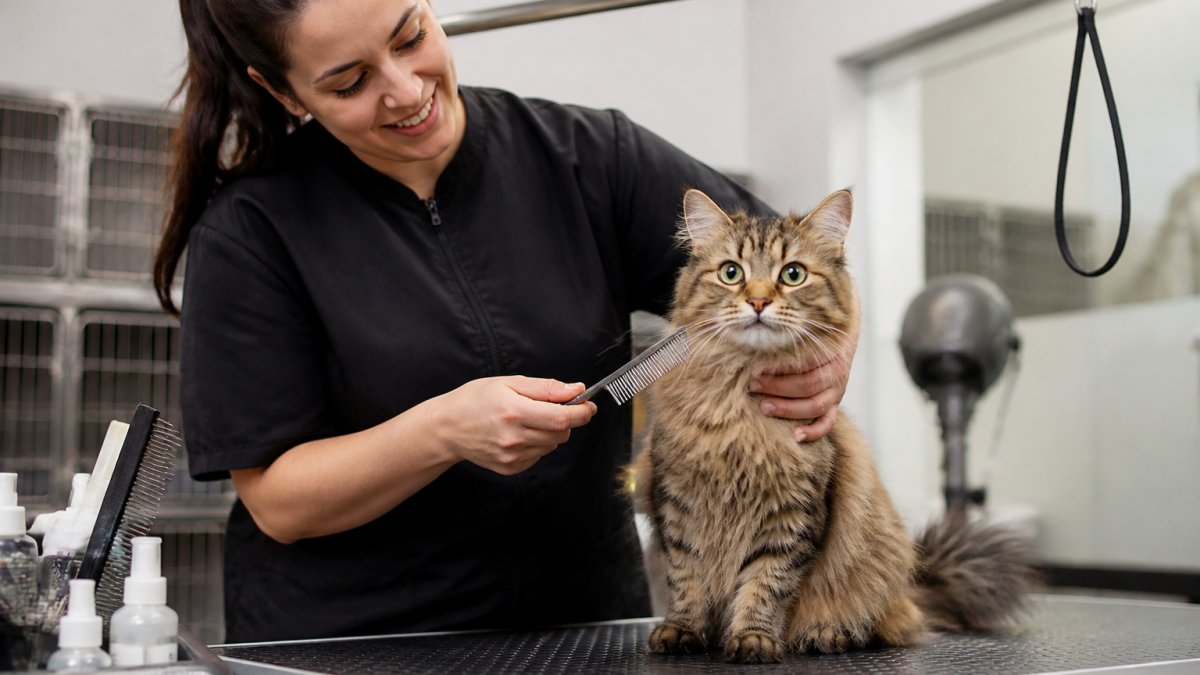
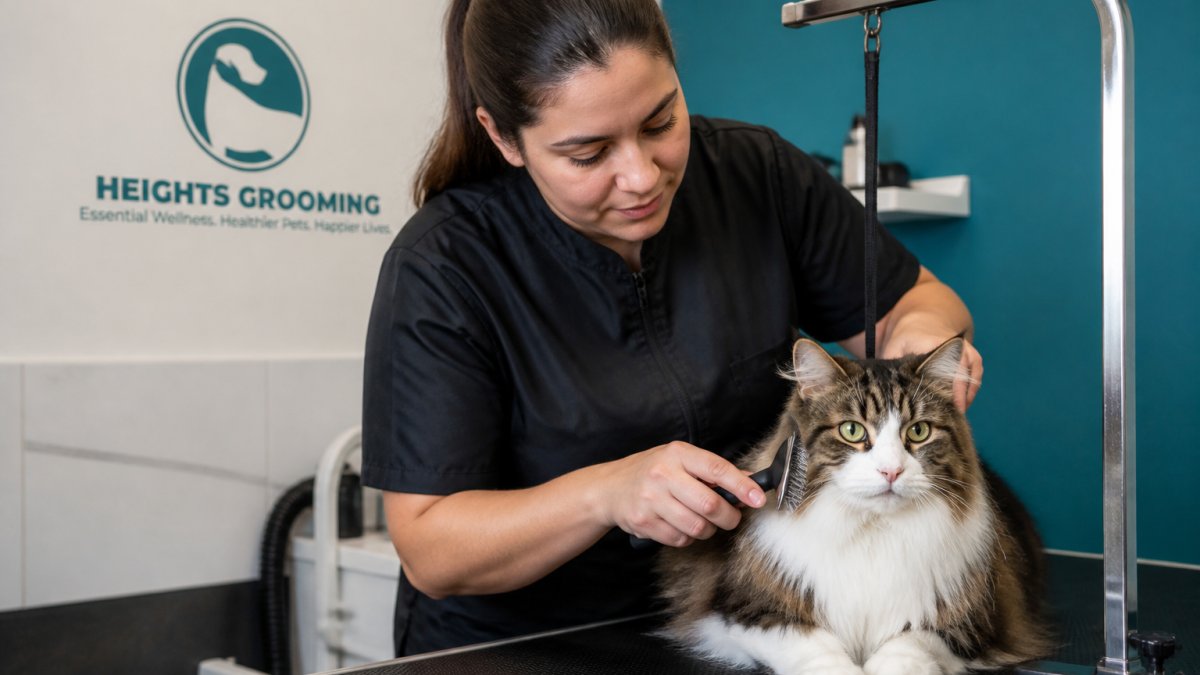
Short sessions beat long ones: let the cat sniff the brush, brush one body area per session, reward with a treat or play, and build gradually. Coat type changes the tools, long-haired cats need more frequent brushing to prevent tangles behind the ears and under the legs, while short-haired cats often do well with a rubber curry brush and less frequent sessions. Senior cats and cats with arthritis may need gentler, shorter handling. For claw care, you can also read about professional nail trims.
Avoid pulling through a mat, since tugging can hurt the cat; professional assessment is a safer option for severe matting.
Step-by-step guide on cat grooming techniques using a soft brush on a long-haired cat to ensure a calm experience.
A long-haired cat receiving gentle brushing to help maintain its coat and remove loose fur.
Cat Grooming Appointment Preparation: A Calm Start
Help your cat become comfortable with its carrier well before the grooming appointment by leaving it accessible at home with familiar bedding. On appointment day, transport your cat in a secure carrier and let our grooming team know about any previous stressful experiences, handling sensitivities, or health concerns.
We aim to handle cats one at a time, using gentle restraint only as needed and pausing when a cat needs a break. Every cat is different, so we cannot guarantee any particular experience, but we watch the cat's signals and adjust.
If you are still deciding whether professional cat grooming is right for your cat, you can learn more on the Heights Grooming website. When you are ready, you can request an appointment or find current pricing there.
When Should a Cat See a Vet Instead of a Groomer?
Groomers can observe and report what they notice, but groomers do not diagnose or treat medical conditions. See a veterinarian for open sores, scabs, oozing skin, sudden patchy hair loss, constant scratching or head shaking, ear discharge or a strong odor, lethargy, appetite changes, weight loss, or a cat that suddenly will not tolerate touch.
Severe matting that pulls skin tight, or a cat that panics under any handling, may also need a veterinary conversation first, and that call belongs to your vet, not your groomer.
How Do You Choose a Cat-Experienced Groomer?
Ask direct questions before you book. A groomer who works with cats regularly will answer them without hesitation.
What to ask | Why it matters |
|---|---|
Do you groom cats regularly? | Cat handling differs from dog handling |
How do you handle a stressed cat? | Reveals low-stress practices |
What happens if matting is severe? | Shows honest limits and safety focus |
Trust your read on the answers. A groomer who promises a perfect result on every cat, every time, is overselling.
What Matters Most for Safe Cat Grooming in Houston
Safe cat grooming in Houston comes down to three habits: read the cat's stress signals, keep sessions short and gentle, and know when to hand off to a veterinarian. Every cat is different, so brushing frequency, tools, and appointment pacing should follow the individual cat, not a fixed schedule.
When professional help makes sense, Heights Grooming offers salon-based cat grooming with individualized care. Grooming prices are published on our website, and additional charges are discussed with you before we proceed. We do not offer mobile grooming.
You can request an appointment with Heights Grooming at https://heightsgrooming.com.
Frequently Asked Questions
How can I tell if my cat is stressed during grooming?
Watch for flattened ears, dilated pupils, a twitching tail, hissing, growling, or attempts to flee. Some cats freeze instead of reacting loudly, which can look calm but signals fear. If your cat shows these signs, pause and give space rather than pushing through. During a professional cat grooming appointment, a groomer can adjust pace or pause when stress signals appear. Persistent fear or aggression around handling is worth discussing with your veterinarian before booking again.
How often should a cat be professionally groomed?
There is no single schedule. Frequency depends on coat length, breed, age, health, shedding, and how well your cat tolerates home brushing. Long-haired cats often need more frequent professional cat grooming to prevent mats, while short-haired cats may need only occasional hygiene care. Your groomer can assess coat condition and suggest a realistic interval. Some cats do well with seasonal visits; others benefit from regular appointments. Adjust based on what you observe between visits.
Can a groomer remove severe mats from a cat's coat?
Mild tangles often respond to gentle cat mat removal, but tight mats pressed against the skin may need professional assessment. Groomers should never forcefully demat or use scissors near the skin, since cat skin is thin and easily cut. In some cases, a veterinarian may need to evaluate skin health before grooming.