 how-to
How to Brush Double-Coated Dogs: A Step-by-Step Guide
Last Updated: October 25, 2026
Quick Summary
Regular brushing helps remove loose hair, prevent tangles, and maintain a double-coated dog's coat. The best brushing technique and frequency depend on the breed, coat condition, and individual dog's needs.
- Part the coat to the skin and brush one thin line at a time, overlapping each pass slightly.
- Use a wide-toothed comb as a check tool: if it catches, you have not reached the undercoat.
- Double-coated dogs may shed year-round, with some experiencing heavier seasonal shedding.
- Short, gentle brushing sessions can help keep grooming comfortable for your dog.
- Avoid pulling on tightly matted fur, and consult a professional before shaving a double-coated dog.
Table of Contents
- Step 1: Pick the Best Brush for Double-Coated Dogs
- Step 2: Line Brushing a Dog, Section by Section
- Step 3: How Often to Brush a Double-Coated Dog
- Common Brushing Mistakes and Signs of Discomfort
- Frequently Asked Questions
Step 1: Pick the Best Brush for Double-Coated Dogs
The best brush for a double coated dog reaches the undercoat without scraping the skin.
A double coat has a soft, dense undercoat and longer guard hairs on top; our guide to double coated breeds breaks down common breeds and their needs.
- Slicker brush: Weekly upkeep on medium coats; choose flexible pins and a cushion that gives under pressure.
- Undercoat rake: Can help remove loose undercoat from suitable coat types. Choose rounded teeth and use gentle pressure to avoid irritating the skin.
- De-shedding tool: May help remove loose hair when appropriate for the dog's coat. Avoid excessive use or pressure, which can irritate the skin or damage the coat
- Wide-toothed comb: Your check tool, if it glides through, you've reached the undercoat.
Stiff, sharp pins and heavy pressure cause brush burn, a painful red irritation along the spine and hips. If your dog flinches, stop and check the skin.
Step 2: Line Brushing a Dog, Section by Section
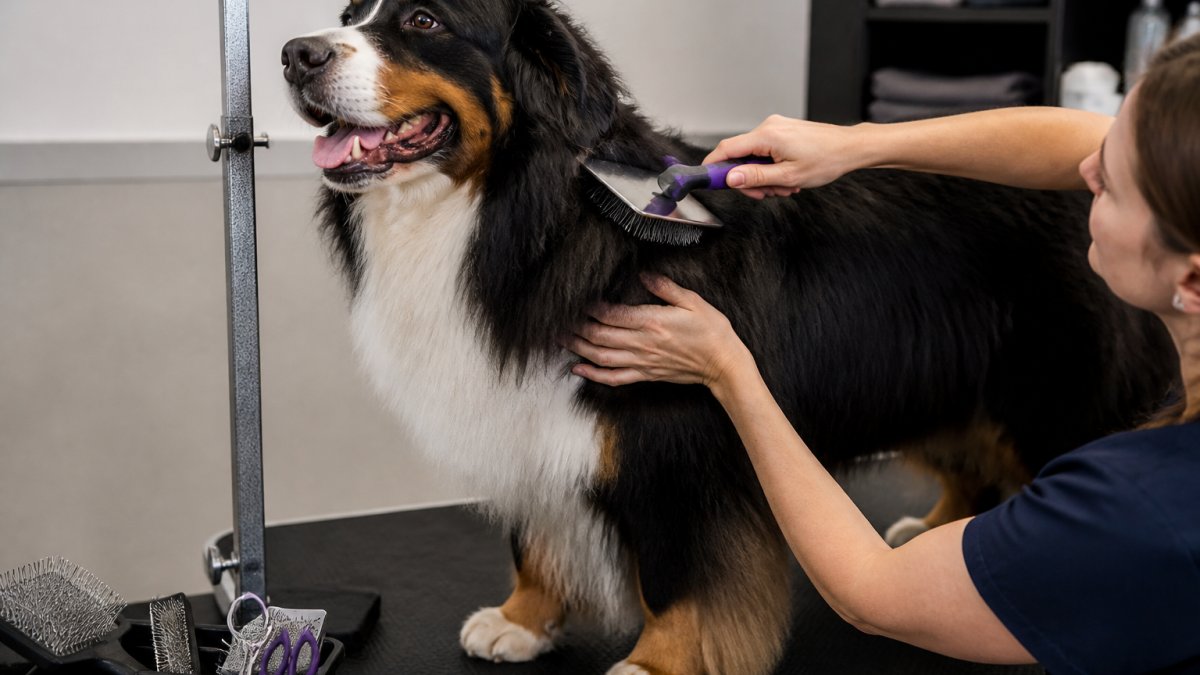
Line brushing is a grooming technique that helps reach loose hair and tangles beneath the outer coat. Working in small sections, gently part the coat and brush in the direction of hair growth using a tool appropriate for your dog's coat type. Avoid excessive pressure or pulling and stop if your dog shows signs of discomfort.
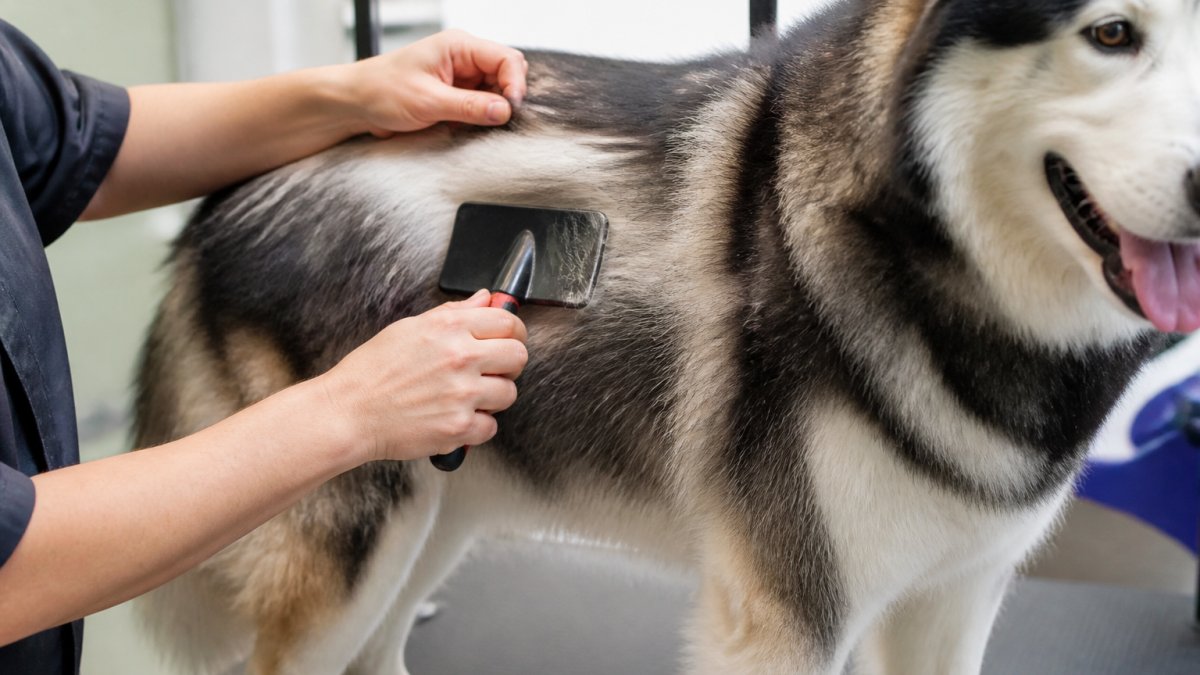
Grooming a double-coated dog using a brush while gently separating sections of the coat.
Here's how to do it:
- Start at the rear. Part the coat with your free hand until you see skin.
- Brush one line. Use short, gentle strokes in the direction of hair growth, working from the part outward.
- Move up an inch. Part the next line, repeat, and overlap each pass slightly.
- Work the sides, chest, then hindquarters. Leave the face, ears, belly, and paws for last with a softer brush.
- Check with a comb. Gently use a comb appropriate for your dog's coat to check for remaining tangles. If the comb catches, avoid pulling and carefully assess the area before continuing.
For long coats, brush smaller sections with lighter pressure; for short, dense coats, a rake does more work than a slicker.
Step 3: How Often to Brush a Double-Coated Dog
Regular brushing helps remove loose undercoat and reduce tangles. Brushing frequency varies by breed, coat length, and shedding patterns. Some double-coated dogs benefit from more frequent brushing during periods of heavy shedding.
A few practical rules:
- Keep brushing sessions comfortable. because some dogs tolerate longer sessions well.
- Brush before and after bathing as appropriate. Gentle brushing before bathing helps remove loose hair and tangles, while brushing after proper drying can help maintain the coat.
- Handle mats gently. Avoid pulling or brushing forcefully through tightly matted fur. Seek professional grooming assistance when mats cannot be removed comfortably.
- Avoid unnecessary shaving. Double-coated dogs generally should not be shaved unless there is a medical or coat-care reason, as shaving can affect coat regrowth. (Double-Coated Dog Breeds: Care, Grooming, and Shedding).
If home brushing isn't keeping up with shedding, professional de-shedding can help remove the loose undercoat safely. Visit heightsgrooming.com to review services, pricing, and request an appointment when ready.
Common Brushing Mistakes and Signs of Discomfort
The most common double coated dog mistake is brushing only the topcoat: the hair looks smooth, but the undercoat stays packed and mats form close to the skin. Other frequent errors include pressing hard enough to scratch the skin, brushing a mat instead of working it loose first, using a de-shedding tool every single day, and skipping the comb check.
Watch for signs your dog needs a break: flinching, lip licking, turning to look at the brush, or trying to walk away. These are early warnings, not stubbornness, ease off, check the skin, and switch to a softer tool.
If you find red patches, scabs, or a hot spot, stop brushing and call your veterinarian. Our groomers can point out coat and skin concerns noticed during a visit, but we don't diagnose medical conditions.
Frequently Asked Questions
What brush is best for a double-coated dog?
A slicker brush with flexible pins works for the topcoat and loose surface hair, while an undercoat rake or de-shedding tool reaches the denser undercoat. A wide-toothed comb is useful for checking your work and lifting tangles. Match pin length to coat length, and choose softer pins for sensitive skin. Short strokes with light pressure protect the skin and guard hairs, and a comb should glide through when you finish.
How often should you brush a double-coated dog?
Brushing frequency depends on your dog's breed, coat length, and shedding patterns. Double-coated dogs may need more frequent brushing during periods of heavy shedding. Regular brushing helps remove loose hair and prevent tangles. A professional groomer can recommend suitable tools and a brushing routine for your dog's individual coat.
Can brushing damage a double-coated dog's coat?
Yes. Using inappropriate grooming tools or applying excessive pressure can irritate a dog's skin and damage its coat. Brush gently, avoid pulling through tight mats, and stop if your dog shows signs of discomfort. Consult a professional groomer if you're unsure which tools or techniques are appropriate for your dog's coat.
Brushing a double-coated dog well takes the right tool, a real technique, and a schedule you can keep. When home care isn't enough, Heights Grooming offers professional grooming for double-coated breeds and Doodles at our Houston Heights salon, with pricing published on our website and any added services approved with you before we begin. Get started with Heights Grooming and request an appointment to keep your dog's coat healthy and mat-free.