 blog
Is Health-Focused Grooming Worth It for Large Dogs?
Last Updated: October 26, 2026
Quick Summary
Professional grooming can help maintain a large dog's skin and coat while giving groomers an opportunity to notice unusual changes that may need veterinary attention. Grooming frequency depends on the dog's breed, coat type, lifestyle, and individual needs. At Heights Grooming, we help pet parents establish grooming routines that prioritize comfort, cleanliness, and proper coat maintenance.
- Brush before and after baths to loosen dead coat, and rinse and dry completely, especially the undercoat.
- Check ears and paws weekly for redness, odor, or discharge, and never cut mats out with scissors near skin.
- Double-coated breeds often need more frequent brushing between visits, especially during seasonal coat blows.
- Coat type, not size alone, should drive your grooming schedule, per ASPCA guidance cited in the article.
- If you can't get a comb through the coat to the skin, it's time to groom.
Table of Contents
- Why Health-Focused Grooming Matters for Large Dogs
- Large Dog Grooming Tips for Healthier Skin and Coat
- How Often to Groom a Large Dog
- Frequently Asked Questions
Why Health-Focused Grooming Matters for Large Dogs
Professional grooming is an important part of maintaining a large dog's coat, cleanliness, and overall comfort. At Heights Grooming, our team pays attention to each dog's coat, skin, ears, and paws throughout the grooming process. We may notice unusual changes, such as redness, irritation, or lumps, and communicate those observations to pet parents so they can consult their veterinarian when appropriate. Our focus is on safe, compassionate grooming—not diagnosing or treating medical conditions.
That is the real case for booking a professional groomer rather than guessing at home. The AVMA's guidance on preventive pet care makes the point plainly: regular hands-on checks are how small issues stay small.
If you want to see what this looks like in practice, review our large dog grooming service and how we approach heavy coats.
Large Dog Grooming Tips for Healthier Skin and Coat
Large dog grooming tips that help come down to a few consistent habits:
- Brush before and after baths to loosen dead coat.
- Use a gentle shampoo made for your dog's coat type.
- Rinse thoroughly, then dry completely, especially the undercoat.
- Check ears and paws weekly for redness, odor, or discharge.
- Never cut mats out with scissors near skin.
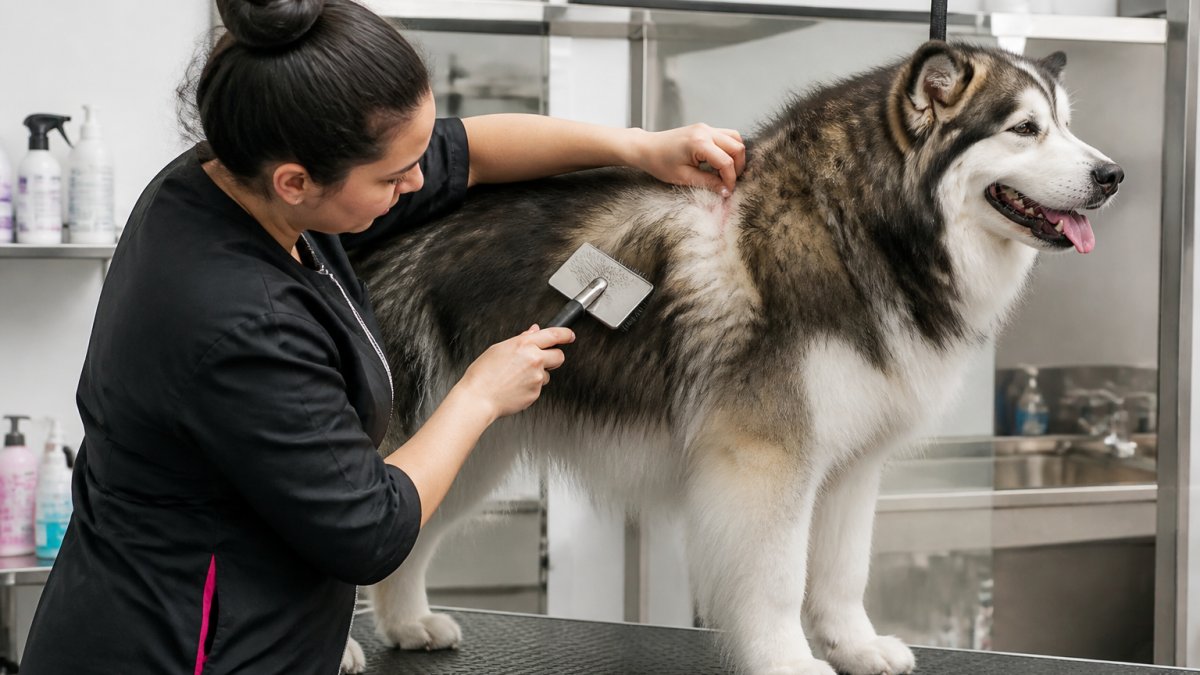
Skipping the dryer and leaving a dense undercoat damp is a common cause of skin irritation.
For step-by-step routines, see our bathing and coat care guidance. Owners of heavy shedders should also read up on professional de-shedding.
How Often to Groom a Large Dog
The ideal grooming schedule for a large dog depends on its breed, coat type, activity level, and individual needs. Dogs with thick, double coats may need additional brushing during seasonal shedding, while Doodles and other dogs with coats prone to matting may benefit from more frequent professional grooming. At Heights Grooming, we help pet parents determine a grooming schedule appropriate for their dog's coat and comfort.
The ASPCA's dog grooming guidance notes that coat type, not size alone, should drive your schedule.
A simple rule: if you can't get a comb through the coat to the skin, it's time. Read our guide to double-coated breeds before you set a calendar, then review our grooming packages and pricing.
Here is the grooming schedule guidance the article lays out for large dogs.
Frequently Asked Questions
How often should a large dog be professionally groomed?
The frequency of professional grooming depends on your dog's breed, coat type, activity level, and individual needs. Doodles and dogs with coats prone to matting may benefit from more frequent appointments, while some short-haired breeds require less maintenance. Regular brushing between appointments helps keep the coat healthy and comfortable. Our team at Heights Grooming can recommend a grooming schedule based on your dog's specific needs.
What are the signs of an ear infection in dogs?
Watch for head shaking, scratching at the ears, redness or swelling, a bad smell, discharge, or sensitivity when the ears are touched. Some dogs tilt their head or seem less comfortable lying down. Groomers may notice these signs during a bath or ear cleaning and point them out, but they cannot diagnose an infection. If you see any of these signs, contact your veterinarian for an exam.
How can I prevent mats in a large dog's coat?
Dog matting prevention starts with regular brushing down to the skin, paying extra attention behind the ears, under the collar, and around the tail. Use a slicker brush and metal comb, and work through small sections instead of surface brushing. Keep up with professional grooming appointments, and ask your groomer to show you the right tools and technique for your dog's coat type.
Large dogs deserve more than a quick bath. They need a groomer who knows heavy coats, senior mobility, and the early signs worth flagging. At Heights Grooming, we offer one-on-one handling, coat-specific care for Doodles and double-coated breeds, and transparent pricing published on our site. Visit heightsgrooming.com to review services and request an appointment, and let's build a routine that keeps your big dog comfortable.